From Žeton to Živjeli: A Beer Lover’s Crash Course in Sarajevo Bar Talk
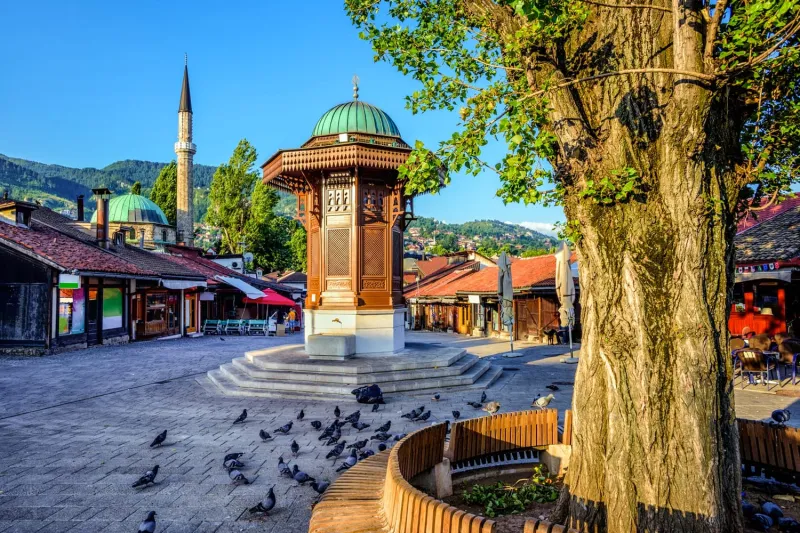
Photo: Sarajevo beer festival craft beer taps bartender pouring draft, via www.roadaffair.com
You can spot a first-time visitor at the Sarajevo Beer Festival from ten paces: they are the one holding a menu like it is a tax form, pointing at a tap, and hoping the word for beer is somewhere in the vicinity of the word for bill. Good news: it is not that complicated. Bosnian bar language is short, useful, and surprisingly forgiving. Learn a handful of terms and the whole festival starts to feel less like a test and more like a long afternoon with friendly people and very cold glasses.
This is not a grammar lesson. It is a bar-side survival kit for US beer travelers who want to order with confidence, understand what is on draft, and know when someone is asking whether you want a small pour or a big one.
Why Eighteen Words Beat a Phrasebook
Most beer trips go wrong in tiny moments: you hesitate at the token booth, you nod yes when you meant no, or you miss the difference between a bottle and a draft. A compact vocabulary fixes that faster than a translation app. The goal is not fluency. The goal is to walk into a pivnica, catch the bartender’s eye, and say something that sounds like you have done this before.
The Beer Itself: Six Words for the Pour
- Pivo (PEE-voh): beer. This is the anchor word. If you remember one thing, remember this one.
- Točeno (TOH-cheh-noh): draft. At the festival, this is the word you want when you are pointing at a tap rather than a bottle.
- Flaša (FLAH-shah): bottle. Useful when you want something sealed, portable, or easier to share.
- Mala (MAH-lah): small. Usually refers to a small pour or small glass.
- Velika (VEH-lee-kah): large. The counterpart to mala, and a word you will hear a lot when the bartender is moving fast.
- Čaša (CHAH-shah): glass. If you need an empty one, a clean one, or just want to clarify what you are getting, this helps.
A real-world scenario: you reach the bar and say, Jedno točeno, molim (YED-noh TOH-cheh-noh, MOH-leem). That means one draft, please. If the bartender asks Malu ili veliku? (MAH-loo EE-lee VEH-lee-koo), they are asking small or large. Say Malu, molim and you are in business.
Places, People, and the Local Pour
- Pivara (pee-VAH-rah): brewery. This is the word you will see on signs, cans, and festival banners.
- Pivnica (PEEV-nee-tsah): beer hall or taproom. Think of it as the local version of a neighborhood beer bar, though the atmosphere can swing from quiet to full-on Friday night.
- Domaće (doh-MAH-cheh): homemade or local. In a beer context, it usually signals something made nearby rather than a big international brand. It is a handy word when you want to steer toward the local stuff.
Try this at a taproom: Imate li nešto domaće točeno? (EE-mah-teh lee NESH-toh doh-MAH-cheh TOH-cheh-noh). You are asking if they have something local on draft. Even if your pronunciation wobbles, the intent lands.
Token Talk and Polite Ordering
- Žeton (ZHEH-tohn): token. At festival bars, tokens are often the currency. Buy them at the booth, then trade them for pours.
- Naručiti (nah-ROO-chee-tee): to order. You will hear this around the bar, and you can use it if you need to sort out who is ordering next.
- Molim (MOH-leem): please, you are welcome, or here you go. This is the Swiss Army knife of Bosnian politeness. Context does the work.
- Hvala (HVAH-lah): thank you. Short, easy, and always welcome.
At the token booth, Dva žetona, molim (DVAH ZHEH-toh-nah, MOH-leem) gets you two tokens. At the bar, Žeton više, molim (ZHEH-tohn VEE-sheh, MOH-leem) means one more token, please. If someone hands you your beer and says Molim, they are not asking you a question. They are saying here you go.
Flavor Clues and the Final Bill
- Račun (RAH-choon): bill or check. In a busy festival setting, you may not need it until later, but it is good to know.
- Svijetlo (SVYET-loh): light. Usually points toward a lighter-colored beer, not necessarily a light-bodied one.
- Tamno (TAHM-noh): dark. Think dark lager, porter, or anything with roasted malt in the glass.
- Pšenično (PSHEH-neech-noh): wheat. If you like wheat beer at home, this is your word.
- Živjeli (ZHEEV-yeh-lee): cheers. Raise the glass, make eye contact, and say it like you mean it.
A useful festival moment: you want something easy and local, so you ask, Šta imate točeno? (SHTAH EE-mah-teh TOH-cheh-noh). That means what do you have on draft. Then say, Malu svijetlu, molim (MAH-loo SVYET-loo, MOH-leem). A small light one, please. If you are feeling bold, ask for tamno and see where the afternoon goes.
Three Real-World Ordering Moments
At the token booth. The line is moving. You have cash in hand and no interest in holding everyone up. Say Žeton više, molim and point at the sign if needed. No speech required.
At the tap. The bartender is wiping glasses and looking past you toward the next person. Catch their eye, not their sleeve. Say Jedno točeno, molim and let them lead. If they ask mala or velika, answer quickly. Festival bars reward momentum.
At the end of the round. You want to settle up, find your friends, and maybe grab one last pour. Račun, molim is the phrase for the bill. Then Hvala and Živjeli cover the exit with good manners.
One last etiquette note: Bosnian bar service is often direct and efficient, not performative. You do not need to wave money or over-explain. A clear order, a please, and a thank-you go a long way. Tipping is usually done by rounding up or leaving a small amount, especially when someone has taken care of a group.
Learn these eighteen words and you will still sound like a visitor. That is fine. Visitors are welcome. You will just sound like a visitor who knows where the taps are, how the tokens work, and how to say cheers without checking a phone. That is most of the battle.