Seven Days, Four Cities, One Long Pour: A Beer-First Route Through Bosnia and Herzegovina
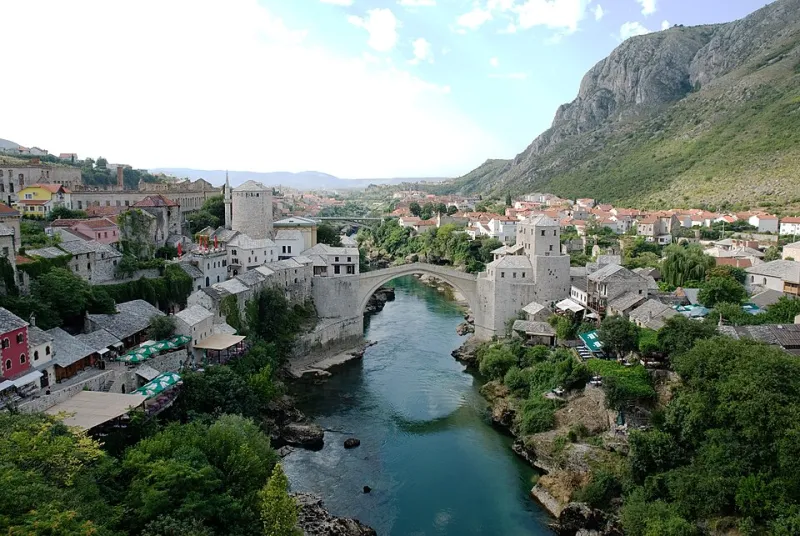
Photo: Ramirez HUN, CC BY-SA 3.0, via Wikimedia Commons
Start With the Calendar, Not the Map
The single most useful piece of advice about building a beer trip around Sarajevo Beer Festival is also the least romantic: check the dates before you book anything else. The festival doesn't sit on a fixed weekend forever, and Balkan flight prices spike the moment a festival window becomes public. Pick your flight into Sarajevo (SJJ) around the confirmed dates, then build the rest of the week like a spine with ribs hanging off it.
The other decision you make up front is whether Belgrade is in or out. It's a real fork in the road, and I'll be honest about the cost of including it further down.
Day 1–2: Sarajevo, Land Slowly
Fly in, drop your bag, and resist the urge to sprint into a tasting room. Sarajevo sits in a valley at about 1,700 feet, the old town is cobbled and steep, and your first afternoon is better spent on orientation than on a hopped-up imperial stout.
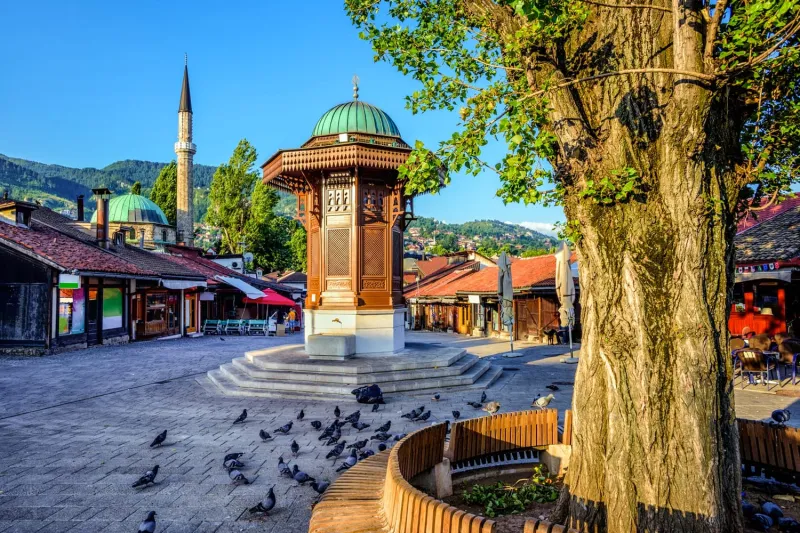
Spend the first evening in Baščaršija, the Ottoman-era core, where the beer list at any given café is short, cold, and cheap. Order a local lager — Sarajevsko is the one you'll see everywhere, brewed at the city's big historic brewery — and eat something involving lamb or burek before you drink anything above six percent. This is your calibration night. Learn what a half-liter costs, learn that the glass arrives with a coaster and no ceremony, and learn that nobody is going to ask you to rate anything.
Day two is your proper city day. The brewery history in Sarajevo is genuinely old and genuinely interesting — the Sarajevska pivara has been at it since the 19th century — and a walking pass through the old town plus a couple of taproom stops is a better use of daylight than another museum. If you want a longer excursion, the cable car up to Trebević and the abandoned bobsled track are a good half-day, and the walk back down earns you a beer.
Day 3–4: Festival Days, Paced Like a Local
Here's the thing about a festival that runs for multiple days: Americans try to do all of it on day one. Don't. Treat the first festival day as reconnaissance — walk the whole site once before you order, note which brewers have short lines, and figure out where the water and the food are.
Then go easy. Sarajevo's pouring culture is built around sitting down, not around collecting. Two or three beers over a long evening, with food in between, is a normal festival night here. The people who look miserable at 11 p.m. are the ones who treated the site like a checklist.
Day two of the festival is your real day. Arrive earlier, work the smaller producers first while you still have a palate, and save anything barrel-aged or double-digit ABV for the last hour. If a brewer offers to explain the beer, take them up on it — this is the single best part of a Balkan festival and it costs nothing.
Day 5: The Bus South to Mostar
The morning bus to Mostar takes roughly two and a half hours and follows the Neretva most of the way, which is one of the better bus rides in Europe and costs a fraction of what you're imagining. Book a seat the day before at the station or through a local agent; the early departures fill up in summer. Sit on the right side if you can, and keep your big bag in the hold rather than on your lap.
Mostar is a small city with a big beer identity. The region's most recognizable lager, Mostarsko, comes from here, and the old town around the Stari Most bridge has no shortage of places to sit with a cold one and watch tourists photograph each other. Give yourself the afternoon for the bridge and the bazaar, then a slow evening in the newer part of town where the prices drop and the conversation goes up.
One practical note: Mostar in summer gets brutally hot by early afternoon. Shift your drinking to late afternoon and evening and use midday for a long lunch in the shade.
Day 6: Trebinje, Where Everything Slows Down
Trebinje is about two hours south of Mostar, near the Croatian and Montenegrin borders, and it is the opposite of a festival city. It's a wine town first — the hills around it are planted with Žilavka and Vranac — but there's cold beer in the plane-tree square and a pace that will feel like a reward after two festival days. If you've been drinking hop-forward beer for four days straight, a glass of local white here is not a betrayal, it's maintenance.
Stay the night. Trebinje is small enough that one evening covers it, but the town is genuinely lovely after dark and the drive back to Mostar in the evening isn't worth the hassle.
Day 7: The Belgrade Add-On, Honestly Assessed
Here's the fork. Belgrade has the deepest craft beer scene in the region — Dogma and Kabinet are the two names that come up most, and the city's taprooms and beer bars are worth several days on their own.
But Belgrade is not close. The bus from Sarajevo runs eight to nine hours, which will eat an entire day of a seven-day trip. Flights are short and can be cheap if you book early, but they add an airport day each way. If you have seven days total, my honest recommendation is to skip Belgrade and give Trebinje and Mostar the extra time. If you can stretch to nine or ten days, take the flight, spend two nights, and treat Belgrade as its own trip rather than a stop on this one.
Where to Sleep Near the Festival
You have three real options. Staying in or near Baščaršija puts you in the middle of everything, walkable to the old town and a short taxi from the festival grounds, but it's noisy and the parking is a nightmare. Marijin Dvor and the streets around it are quieter, more modern, and still a reasonable walk or short ride from the center — this is where I'd book if you want sleep after a long festival night. Grbavica is cheaper and more local, with good cafés, and it's a straightforward taxi or tram hop from the action.
Book early. Sarajevo's hotel stock is limited and festival weekends tighten the market fast.
How to Pace a Week of Tastings
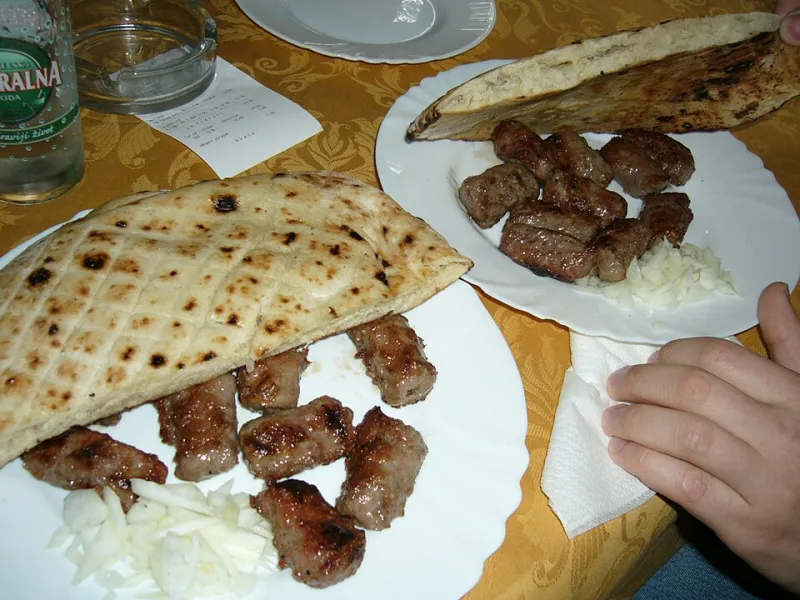
Three rules. First, water between every beer — not as a punishment, as a strategy. Second, eat real food at real meals; ćevapi counts. Third, take one genuinely dry day in the middle of the trip. Put it on the Mostar travel day. Your palate resets, your sleep catches up, and day six tastes better than day four did.
And keep cash on you. A lot of small places in Bosnia and Herzegovina don't take cards, and the currency — the convertible mark — is pegged to the euro at about 1.96, which makes mental math easy. ATMs are plentiful in Sarajevo and Mostar, thinner in Trebinje.