The Last Pour Problem: Chasing Sarajevo’s One-Keg Wonders Without Missing the Party
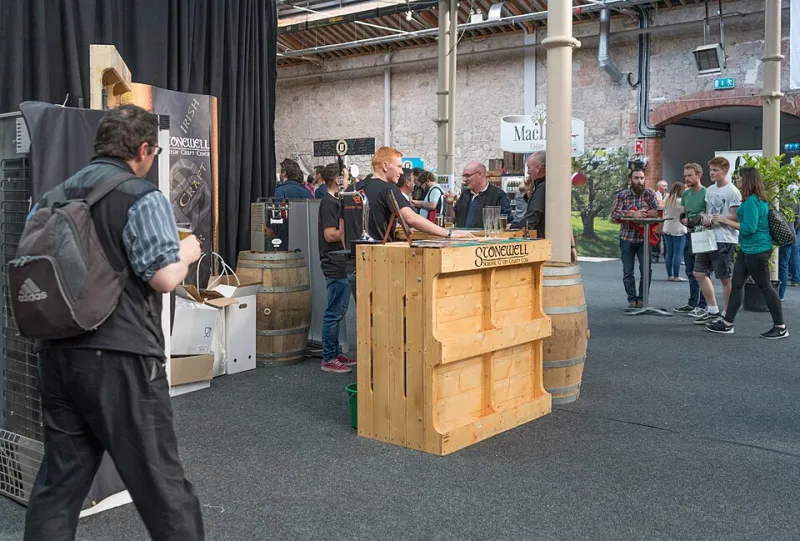
Photo: William Murphy, CC BY-SA 2.0, via Wikimedia Commons
There is a sound at Sarajevo Beer Festival that every beer hunter learns to recognize: a server taps a handle, tilts a glass, gets nothing but foam and air, then glances at the chalkboard and draws a line through a name. Someone nearby groans. Someone else laughs. The keg is gone, and the beer you meant to try in an hour is now a story.
That is not a flaw in the festival. It is the festival. Sarajevo’s beer weekend is built on small batches, brewer’s-table experiments, and collaborations that do not always make it into regular production. If you come looking for a tidy menu of year-round pours, you will find plenty to drink. If you come looking for the beers that make people lean over the table and ask, “What is that?”, you need a plan.
Why the One-Keg Pour Is the Real Headline
A standard tasting room is a controlled environment. The beer list is printed, the taps are steady, and the odds are good that the IPA you liked on Tuesday will be there on Friday. A festival is different. Brewers bring specials because the room is full of curious drinkers. They bring barrel projects, wild fermentations, coffee stouts, fresh-hop experiments, and one-off collaborations because a festival is the rare chance to pour them for an audience that will actually care.
That means scarcity is part of the experience. A keg might hold only a few dozen liters. A brewer might have brought one keg of a beer that was aged in a local barrel, or a test batch that was never meant for wider release. Once it kicks, it kicks. There is no back room, no emergency supply, no “let me check the cellar.” The line through the name on the board is the whole story.
For a US beer traveler, the closest comparison is a taproom-only release or a brewery anniversary pour. You do not need to camp out like it is a bourbon drop, but you do need to pay attention. The good stuff at Sarajevo often announces itself quietly: a handwritten tap label, a small sign taped to a table, a brewer standing next to a keg with a look that says, “This one is weird, and I am proud of it.”
Read the Board Before You Read the Room
Your first move at the festival is not to order. It is to walk the room and read. Look for the tap lists that are not printed. Handwritten additions are a useful signal. So are words like “special,” “barrel,” “collab,” “test batch,” “festival brew,” or a brewery name paired with another brewery name. Those are not guarantees of quality, but they are reliable hints that the pour is limited.
Check the festival program and the breweries’ social feeds the morning of. Brewers often post a photo of a keg or a chalkboard with a note like “pouring until it is gone.” That is not marketing fluff. It is a schedule. If a beer is on your list, make it an early stop rather than a late-night maybe.
Also pay attention to where the beer is pouring. Some one-off beers live at the brewery’s table rather than the main bars. They may be served in smaller pours, and the person pouring may be the brewer or someone who knows the batch intimately. That is a good sign. It is also your best chance to ask a useful question without holding up a crowd.
Three Questions, Asked Fast
You want to be curious without becoming the person who turns a festival line into a seminar. The trick is to ask short, specific questions and then step aside if the brewer wants to talk longer.
First: “Is this a festival-only pour?” That tells you whether you can find it later at the brewery or whether this is your one shot.
Second: “What is the one you would stand in line for?” Brewers know which keg is the most interesting. They also know which one is about to disappear. This question is fast, flattering, and genuinely useful.
Third: “How much is left?” Ask it with a smile, not a spreadsheet. If the answer is “not much,” adjust your route. If the answer is “we just tapped it,” relax and enjoy the fact that you have time.
What not to do: do not ask for a full ingredient list while six people wait behind you. Do not ask the brewer to compare every beer on the table. Do not request a growler fill unless the festival clearly allows it. Ask your quick question, take your pour, and move to the side. The best conversations happen after the line clears.
Pace Around the Scarce Stuff
A scarcity mindset can ruin a good beer day. If you spend all afternoon sprinting between kegs, you will taste less, not more. Build a loose route instead. Pick two or three limited releases you genuinely want. Put the most fragile one first. Then let the rest of the day breathe.
Use small pours. Split a glass with a friend. Alternate between high-ABV specials and lower-ABV pilsners or pale ales. Drink water. Eat something with salt and bread in it. The goal is not to collect every one-off pour in the room. The goal is to be present enough to remember the ones you get.
If a keg kicks before you reach it, do not treat it as a failure. Ask the person at the table what they would pour instead. Ask a nearby drinker what surprised them. The festival is full of consolation prizes, and some of them are better than the beer you were chasing.
The Keg Kicks. That Is the Point.
The hardest part of festival-exclusive beer is accepting that the best thing you taste may never be brewed again. You cannot save it. You cannot order it online. You cannot promise yourself a second glass tomorrow. That is also what makes it memorable.
Take notes. Photograph the chalkboard. Write down the brewery, the beer name, and the one detail that made it strange or good. If you loved it, tell the brewer. A quick “that barrel pour was the best thing I had today” means more than a five-star review ever will.
Then let it go. The next keg is already being tapped somewhere across the room. Sarajevo’s festival rewards the curious, the polite, and the flexible. Chase the one-keg wonders, but do not forget to enjoy the party around them. The line through the name on the board is not a tragedy. It is proof that you showed up for something rare.