The Mountain in the Glass: How Sarajevo's Water Shapes the City's Craft Beer
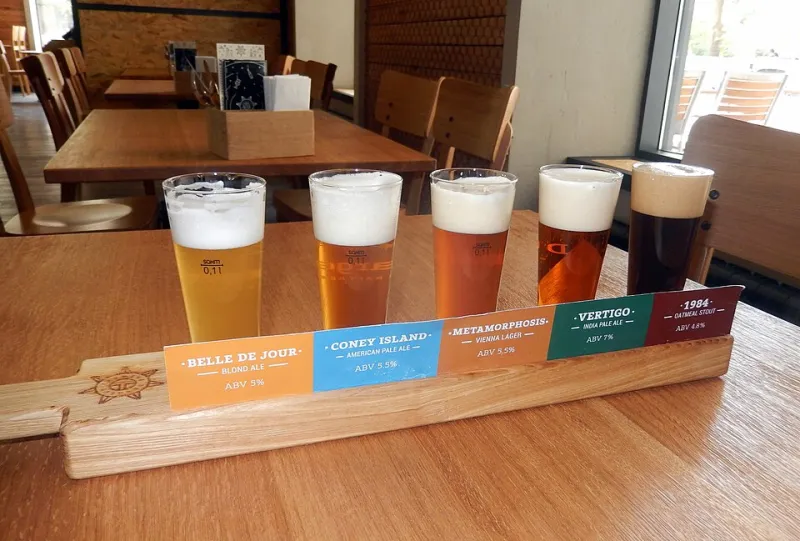
Photo: Armineaghayan, CC BY-SA 4.0, via Wikimedia Commons
Ask a brewer in Sarajevo what makes the local beer taste the way it does and you'll get an answer that sounds less like marketing and more like geology. The water arrives from the mountains above the city, cold and low in the minerals that brewers elsewhere spend real money stripping out. Everything downstream — the mash, the fermentation, the way the beer feels on your tongue at the second sip — starts with that.
I spent a few days before the festival asking the same question in different taprooms, and three brewers walked me through it on the condition that I keep their names attached to their job titles instead of their mash tun secrets. Fair enough. What follows is the version of the story they were happy to have written down.
The Water Arrives Before the Brewery Does
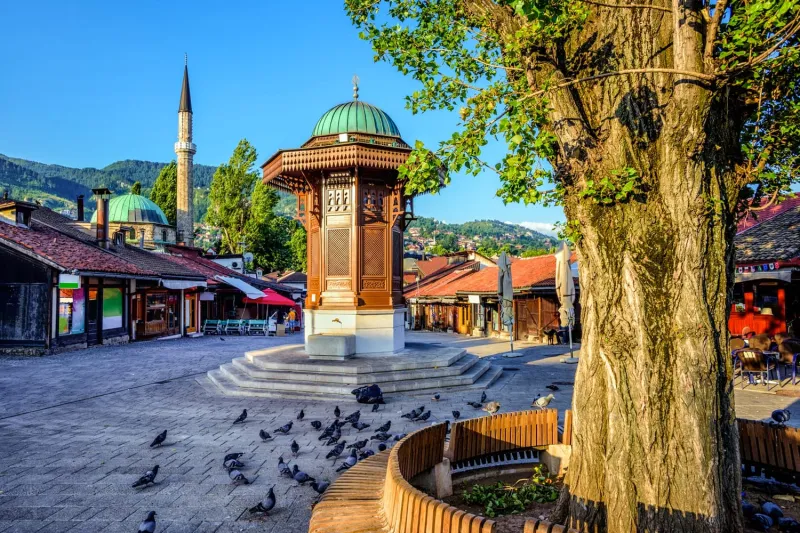
Sarajevo sits in a valley ringed by hills, and its drinking water comes from mountain springs and a network that most locals brag about the way Americans brag about a favorite ballpark. The brewers I spoke with describe it as soft, low in bicarbonate, and remarkably consistent — the kind of starting point that makes a brewer's life easier and, in the same breath, a little boring.
'Boring is the dream,' the head brewer at a small outfit in the hills told me. 'I can build any profile I want on top of water that doesn't argue with me.'
That matters more than it sounds. Hard, alkaline water pushes against the acidity a brewer wants in a crisp lager and rounds off the sharp edges of a hop-forward ale. Soft water does the opposite: it lets bitterness read clean and lets malt sweetness sit forward without turning syrupy. When people say a Sarajevo pilsner tastes 'round' or 'quiet,' that's not restraint for its own sake. That's the water refusing to get in the way.
Malt That Travels, Yeast That Stays
Not everything is hyperlocal, and the honest brewers say so. Barley grows in Bosnia's northern lowlands, but the malt houses that turn it into brewing grain are few, and most small breweries buy base malt from bigger European suppliers. What is local is the decision-making: which lots to buy, how much local wheat or specialty grain to fold in, and how far to push a recipe that has to sell in a city of a few hundred thousand people.
Where the beer gets genuinely tied to the place is fermentation. House yeast strains, propagated and repitched batch after batch, drift in ways that a fresh pitch from a lab never will. A brewery that has been running the same lager yeast for a few years is brewing a beer you literally cannot buy anywhere else, even if the recipe card looks identical.
'You can copy my grain bill,' one brewer said, laughing. 'You can't copy my basement.'
Small Batches, Big Variables
The equipment is modest by US craft standards — mostly tanks measured in hundreds of liters rather than thousands of barrels. That cuts both ways. Small batches mean more variation between brews and less cushion when something goes sideways. They also mean a brewer can respond to a bad batch or a good idea in weeks instead of quarters.
It's why the festival lineup tends to swing between very traditional lagers and slightly odd one-offs: a smoked dark, a wheat with local honey, a pale ale with more bitterness than the local palate usually asks for. Consider it a snapshot of a scene still deciding what it wants to be.
Why a US Drinker Should Care
American craft beer trained a generation of drinkers to look for intensity: more hops, more alcohol, more everything. Sarajevo's best beers ask for a different kind of attention. They're built on balance, on texture, and on the way a soft-water lager finishes clean enough that you want another one instead of a glass of water.
If you're flying in from Portland or Asheville, that's not a downgrade — it's a reset. It's a chance to taste what happens when a brewing culture has excellent water, a modest market, and no incentive to chase the loudest beer in the room.
A Five-Minute Tasting Checklist
Use this at the festival, ideally standing up, ideally with two beers from the same brewery in front of you.
Look at the foam. Soft-water beers tend to hold a fine, creamy head. If it collapses in thirty seconds, note it — carbonation and glassware are part of the story.
Feel the first sip before you taste it. Low-mineral water shows up as a round, almost slippery mid-palate. Harder water feels chalky or drying. That sensation is the terroir talking.
Track the bitterness. In a Sarajevo pilsner, the hop bitterness usually arrives late and leaves clean. In a local hop-forward ale, it may hit earlier and linger — but notice whether it's harsh or tidy. Tidy is the water doing its job.
Hunt for the sulfur note. Good lager yeast can throw a faint matchstick or cooked-corn aroma that fades in the glass. It's a fingerprint of traditional fermentation, not a flaw, unless it sticks around past the first minute.
Let it warm up. Give the beer ten minutes. Malt character that was hiding behind the cold will step forward, and you'll taste whether the grain bill has depth or just color.
Ask the brewer what's local. Not everything on the table will be, and the ones who care will tell you exactly which part is. That conversation is worth more than any badge on a tent.
The short version: Sarajevo's beer tastes like the hills it comes from, filtered through small tanks and stubborn yeast. Drink it slowly enough and you can follow the water all the way down.